How To Promote A Press Release
If you want your announcements to drive actual revenue in 2026, you need to stop acting like a passive broadcaster and start thinking like a relentless growth operator.

Most founders waste thousands distributing news that no one reads. True press release promotion requires strategic amplification. Here is how battle-tested operators break down, distribute, and weaponize their announcements to dominate market share and cut through the modern media noise.
In this article…
- 01Stop Relying On The Wire To Do Your Job
- 02The Mass-Pitching Illusion vs. Targeted Amplification
- 03The Agency Resource Trap vs. Native Repurposing
- 04The Impressions Mirage vs. Pipeline Reality
- 05Optimizing For The Generative Engine Era
- 06The 2026 Playbook For Announcement Amplification
- 07The Cost Of Staying Invisible
- 08Key takeaways
- 09Frequently asked questions
Stop Relying On The Wire To Do Your Job
I see it every week. A startup raises a strategic round, ships a highly requested product update, or lands a major partnership. They pay for a top-tier newswire, hit publish, and they wait for the phone to ring. Spoiler alert: it doesn’t.
In my experience, treating wire syndication as your entire promotion strategy is a guaranteed way to burn cash. It is the equivalent of shouting your company milestones into an empty canyon—therapeutic, perhaps, but entirely useless for your bottom line.
Modern distribution requires active amplification. You cannot outsource your leverage to a passive platform and hope the media comes to you. The media is overwhelmed, understaffed, and completely uninterested in digging for your story.
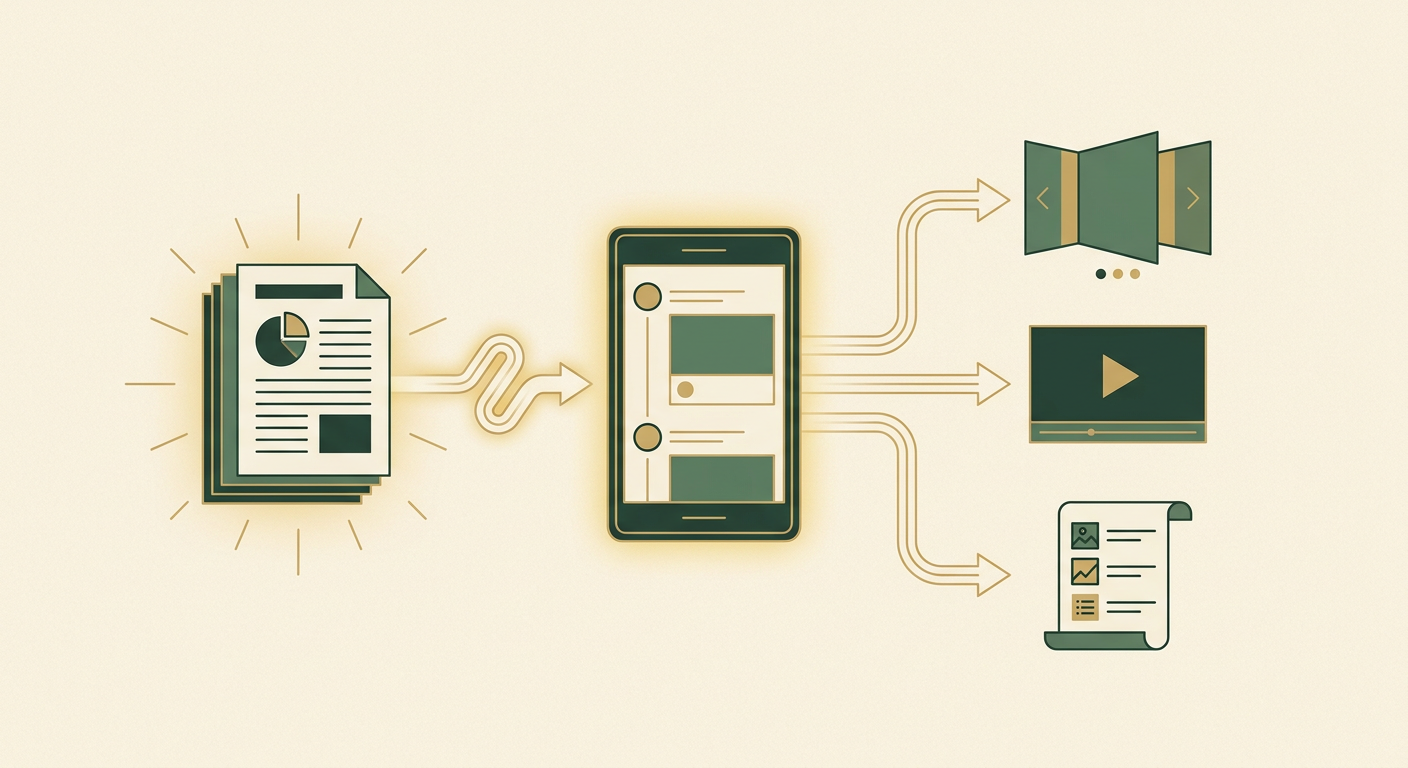
The real game is played on the ground. Top operators know that a press release is not the finish line—it is merely the raw material. It is the verified source document that you must actively chop up, repackage, and push through high-impact digital channels to force your market to pay attention.
The Mass-Pitching Illusion vs. Targeted Amplification
The biggest misconception in public relations is that sheer volume equals visibility. Amateurs think the secret to promotion is scraping a massive database of contacts and blasting 5,000 reporters at once with an identical message.
What actually happens on the ground? That generic media pitch goes straight to the spam folder, buried right next to the discount pharmaceutical ads and fake invoice scams.
In 2026, media relations is a sniper operation, not a carpet bombing campaign. The growth operators winning the visibility war ignore mass pitching completely. They do not waste time on reporters who have never covered their specific niche.
Instead, they identify 5 to 10 highly relevant journalists, niche newsletter authors, and LinkedIn creators who actually drive the conversation in their industry. They build the relationship before they need it by interacting with their content and offering value upfront.
When it’s time to promote the release, they offer these key voices exclusive data or an unfiltered interview with the founder. You don't need a thousand readers to launch a campaign; you need the right ten voices to validate it.
The Agency Resource Trap vs. Native Repurposing
Founders often fall for the false belief that promoting news requires a massive external PR agency and a six-figure monthly retainer. They assume you need a bloated team to push a narrative effectively across the internet.
The uncomfortable truth is that capital efficiency favors the resourceful, not the heavily funded. You don’t need a massive team; you need absolute leverage over the content you just paid to create.
Top operators bypass the agency trap by employing a zero-click content strategy. They take the core press release and systematically break it apart. One 800-word announcement becomes a five-part educational thread on X, a visually engaging carousel on LinkedIn, an internal Slack community drop, and a personalized email blast to their existing CRM.
This is where the leverage happens. By using AI to draft your initial release, you can rapidly repurpose the core narrative into a dozen native social formats in a matter of minutes.
You let the social platforms do the heavy lifting for you. You feed their algorithms exactly what they want: native, high-engagement storytelling that never asks the user to click an external link.
Social Media Repurposing Prompt
Act as a senior B2B social media strategist. I am pasting our latest press release below. Do not just summarize it. I want you to extract the core narrative, the best executive quote, and the most compelling data point. Then, write three native social media posts: 1) A conversational, text-only LinkedIn post for our Founder explaining the 'why' behind this news. 2) A provocative, short-form thread for X (Twitter) focusing on the data. 3) A brief, value-driven Slack community announcement.
Activating Founder-Led PR For Maximum Reach
Do not post the announcement exclusively from your faceless corporate company page. The harsh reality is that nobody cares about a corporate logo bragging about a recent milestone.
People buy into people. Your founder's personal brand is your highest-leverage distribution channel today.
When the CEO posts the raw, behind-the-scenes story of what it actually took to achieve the milestone announced in the press release, engagement skyrockets. You use the official release for third-party validation and search indexing, but you use the founder’s authentic voice to drive the actual traffic and start conversations in the comments.
The Impressions Mirage vs. Pipeline Reality
If I have to look at another post-campaign report bragging about 50 million potential impressions, I might actually lose my mind.
Impressions are the ultimate vanity metric of the PR industry. They look incredible on a slide deck presented to the board, but they do absolutely nothing to lower your customer acquisition cost or drive real enterprise value.
The reality is that true PR success is measured in hard business outcomes. Modern public relations must be tied directly to pipeline generation, audience retention, and authority signaling.
Instead of tracking phantom eyeballs, growth operators track qualified referral traffic and high-authority backlinks. They monitor their share of voice to see if they are actually stealing the digital conversation away from their competitors.
If your press release promotion doesn't result in a measurable spike in high-intent inbound inquiries, investor interest, or stronger organic search rankings, you are simply generating noise.

Optimizing For The Generative Engine Era
Here is a pragmatic reality for 2026: traditional search is no longer the only game in town. If you are not optimizing your press release promotion for AI-driven search engines and Large Language Models, your strategy is already obsolete.
When potential buyers or investors research your company today, they are not just scrolling through blue links. They are asking AI assistants to summarize your market position, competitive advantages, and recent momentum.
These intelligent models pull directly from recent news coverage, verified PR distribution feeds, and high-authority syndication networks.
This means you must prioritize technical press release SEO optimisation alongside your aggressive social promotion. You need exact-match keywords, clear proprietary data points, and structured formatting that machines can easily parse and verify.
When you successfully promote the release across credible blogs and industry forums, you are actively training the AI models to view your startup as the definitive category leader.
The 2026 Playbook For Announcement Amplification
To stop failing at promotion, you must fundamentally shift your mindset. A press release is not a complete strategy; it is a tactical asset that requires serious operational muscle to execute properly.
Here are the three rapid-fire rules to live by when deploying and promoting your next big announcement:
- Rule 1: Slice the asset into native pieces. Never just drop a URL on a social media feed and beg people to read it. Extract the best executive quote, the most shocking statistic, or the core problem you solved, and format it natively for the platform you are posting on.
- Rule 2: Leverage internal distribution first. Before asking strangers to care about your news, activate your own ecosystem. Push the news to your customer email list, your monthly investor updates, and your internal team. Make it frictionless for your employees to amplify the message with pre-written copy.
- Rule 3: Marry broad distribution with targeted outreach. Combine the baseline coverage provided by the best press release distribution services with hyper-targeted, one-to-one direct messages to key industry voices. Broad visibility creates the foundation; personal outreach secures the spike in attention.
The Cost Of Staying Invisible
The internet is far too loud for passive publishing. If you continue to treat press release distribution as a basic box-checking exercise, your biggest company milestones will die quietly in the dark.
While you wait around for journalists to miraculously discover your news, your competitors are actively weaponizing their announcements. They are out-hustling you on social platforms, hijacking the industry narrative, securing the valuable backlinks, and capturing the market share that should have been yours.
Do not let a great announcement go to waste because of a lazy, outdated promotion strategy. It is time to get aggressive and intentional with your distribution.
If you are ready to maximize your reach without burning through your runway, explore our transparent distribution plans. Let our team of operators help you turn your next press release into measurable, high-impact pipeline.
Key takeaways
Press release promotion in 2026 demands active, multi-channel amplification rather than passive wire syndication. Top operators slice their releases into native, zero-click social content, prioritize founder-led storytelling over corporate broadcasting, and directly tie their PR efforts to hard pipeline metrics. By marrying targeted one-to-one journalist outreach with algorithmic optimization for AI search engines, you can transform a simple announcement into a significant competitive advantage.
See distribution plansFrequently asked questions
What is the most effective social media platform for promoting a B2B press release?
In 2026, LinkedIn remains the dominant channel for B2B press release amplification. However, success requires using native formats like text-only founder stories or document carousels rather than just pasting the release URL, which algorithms actively suppress.
Should I pay for sponsored social media ads to promote my press release?
Paid amplification can work, but it should be highly targeted. Instead of boosting the post to a broad audience, run account-based marketing ads targeting decision-makers at specific companies you want to reach, using the press release as a trust-building asset.
How long should I spend promoting a press release after it is published?
The active promotion window for a standard announcement is typically 48 to 72 hours. However, the core data and quotes from a high-value press release should be repurposed into evergreen content, blog posts, and newsletters for up to a month.
Is email marketing a good way to promote a press release?
Absolutely, provided you adapt the message. Do not send the full, formal press release text to your marketing list. Instead, write a conversational email explaining why the news matters to your customers, and link out to the full release for those who want the details.
Can I republish my press release on my own blog to help with promotion?
Yes, but you must use a canonical tag pointing to the original wire distribution to avoid duplicate content penalties. Alternatively, rewrite the announcement as a casual, behind-the-scenes blog post to give your audience a fresh angle on the same news.
Keep reading
4 min read
How To Post A Press Release On Facebook
Discover how to successfully share your company announcements on social media without algorithmic penalties. This tactical guide reveals how to transform traditional media updates into zero-click native content that maximizes organic reach and drives real business engagement.
12 October 2026
4 min read
How Long Should A Press Release Be? (Perfect Length By Use Case)
Discover the optimal press release length for different types of company announcements. Stop guessing word counts and learn how top operators structure product launches, executive hires, and data reports to maximize journalist engagement and secure valuable media coverage.
8 October 2026
5 min read
How To Cite A Press Release (With Examples)
Learn how to properly cite a press release in APA 7, MLA 9, and Chicago 17 formats. Stop pasting raw URLs and start using citations as trust signals to build credibility in your pitch decks and marketing collateral.
5 October 2026Join the conversation
Comments are read by our editors before they appear on the page.