How To Cite A Press Release (With Examples)
A raw URL pasted into a pitch deck isn't a citation—it's a credibility killer. Properly formatting your media mentions proves you pay attention to the details.
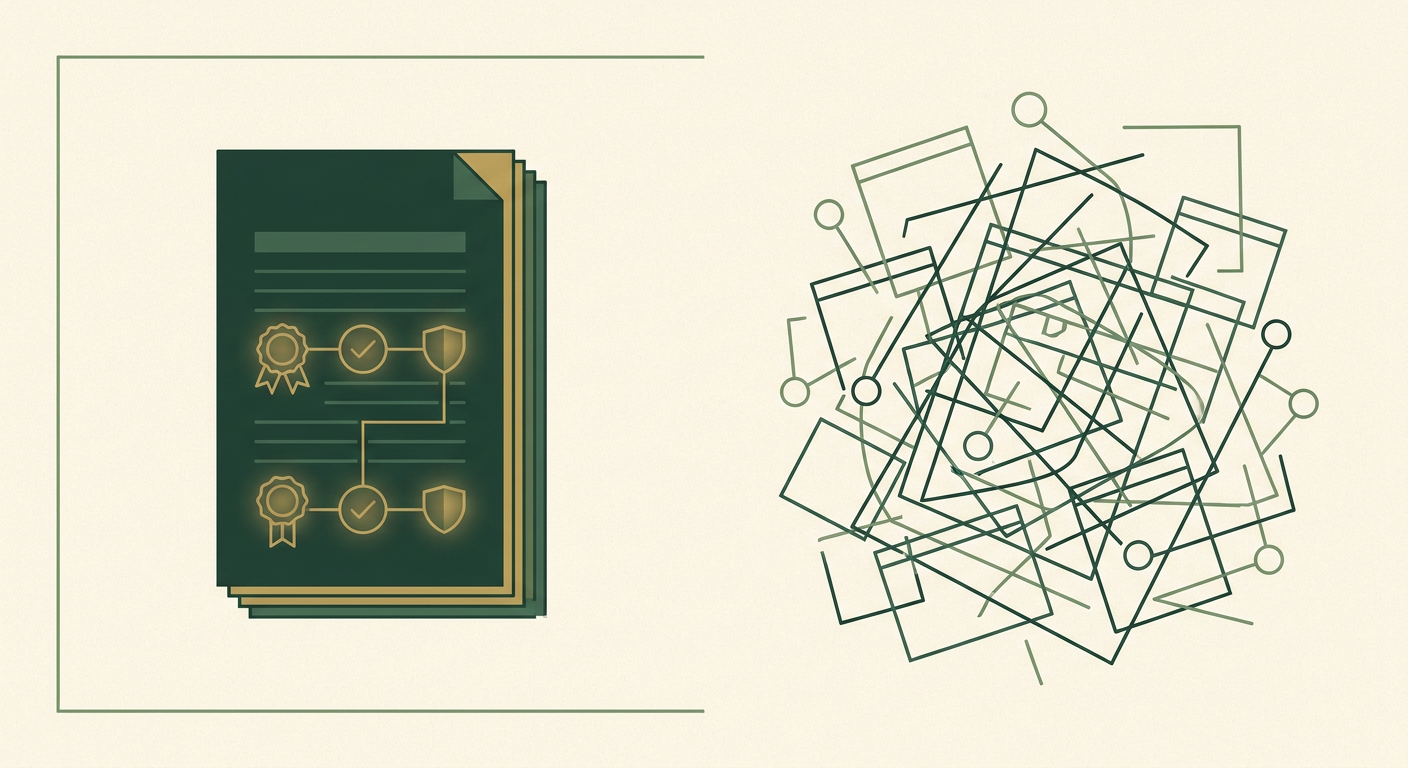
In my experience, founders burn thousands of dollars earning media coverage only to butcher the presentation in their own collateral. Properly citing your announcements is a zero-cost leverage play that transforms a messy report into a highly credible asset.
The Raw Link Disease
We need to talk about how you present your wins.
You just finalized a massive announcement. You published a press release and secured real media coverage.
But when it comes time to reference that win in a white paper, investor update, or industry report, you completely drop the ball.
What actually happens on the ground? Founders and operators just paste a naked, unformatted URL at the bottom of the page.
Pasting a naked link into a pitch deck and calling it a citation is like showing up to a board meeting in a bathrobe—everyone sees it, nobody respects it, and you are definitely not getting funded.
It looks amateurish and screams that you lack basic attention to detail.
The Real Cost Of Sloppy Documentation
Let's break down the anatomy of this failing approach.
Most operators view referencing their own newsroom as a middle-school bibliography assignment.
They think as long as the link is clickable, the job is done.
But pasting raw URLs into a slide deck forces the reader to do the heavy lifting.
They do not know the date, the publisher, or the context before they click.
When you send a deck to a tier-one investor, they scrutinize your operational maturity. A raw hyperlink that spills onto a second line breaks the visual hierarchy of your slide.
It tells the reader that you rushed the job, and this friction creates doubt.
Reframing Formatting As A Leverage Play
Here is the uncomfortable truth: how you format your data matters just as much as the data itself.
The turning point happens when you realize that citations are trust signals, not academic chores.
When an enterprise client reads your white paper, standard formatting acts as a psychological trigger.
It tells them you operate with institutional rigor.
Much like mastering AP style guidelines for the announcement itself, formatting your references correctly shows you belong in the big leagues.
It is a pure exercise in capital efficiency—you already paid for the coverage, so extract maximum value by presenting it flawlessly.
The Structural Fix: How To Cite Properly
Building the right engine means removing the guesswork from your documentation.
Below are the three structural formats you need to memorize, depending on your industry standard.
For all three, remember that the author is usually the organization, not an individual.
The APA 7 Standard
The American Psychological Association (APA) 7th edition is heavily used in business, tech, and social sciences.
The title must be written in sentence case and italicized.
You must also include the bracketed text '[Press release]' immediately after the title, before the period.
Here is the exact framework to follow, alongside a reusable AI prompt to automate the formatting:
- Organization Name. (Year, Month Day).
- Title of the release in sentence case and italicized [Press release].
- URL without a trailing period.
- Example: Apple Inc. (2026, April 15). Apple introduces new MacBook Pro [Press release]. https://www.apple.com
APA 7 Citation Prompt
Act as an expert copy editor. Take the following URL and raw details of a press release and format it into a perfect APA 7th Edition reference entry. Ensure the author is the issuing organization, the title is in sentence case and italicized, and the [Press release] tag is included before the URL.The MLA 9 Standard
The Modern Language Association (MLA) 9th edition is standard in the humanities, media, and cultural sectors.
Unlike APA, the headline here must be written in title case inside quotation marks.
The organization issuing the news is listed as the publisher, followed by the date and the URL.
Here is the breakdown of the mechanics:
- "Title of the Release in Title Case."
- Organization Name, Day Month Year, URL.
- Press release.
- Example: "Apple Introduces New MacBook Pro." Apple Inc., 15 Apr. 2026, https://www.apple.com. Press release.
The Chicago 17 Standard
The Chicago Manual of Style (17th edition) is the gold standard for historical research, publishing, and formal executive reports.
You need to list the organization first, followed by the title in quotation marks, and explicitly state the date of publication.
Here is the correct structure for a standard bibliography entry:
- Organization Name.
- "Title of the Release in Title Case."
- Press release, Month Day, Year.
- URL.
- Example: Apple Inc. "Apple Introduces New MacBook Pro." Press release, April 15, 2026. https://www.apple.com.
Mastering The In-Text Reference
A bibliography entry is only half the battle. You also need to know how to handle references within the body of your reports.
In my experience, this is where operators get incredibly lazy, dropping an asterisk that leads to nowhere.
For APA, an in-text citation requires the organization and the year in parentheses. For example: (Apple Inc., 2026).
For MLA, you simply use the organization's name since there are no page numbers to reference, looking like this: (Apple Inc.).
Executing this correctly ensures a seamless reading experience.
Frictionless reading drives conversions, and that is the ultimate goal of your collateral.
Your 30-Day Implementation Timeline
You know the rules. Now you need to enforce them across your organization.
Stop letting your team distribute messy collateral. Follow this exact timeline to transition to professional formatting.
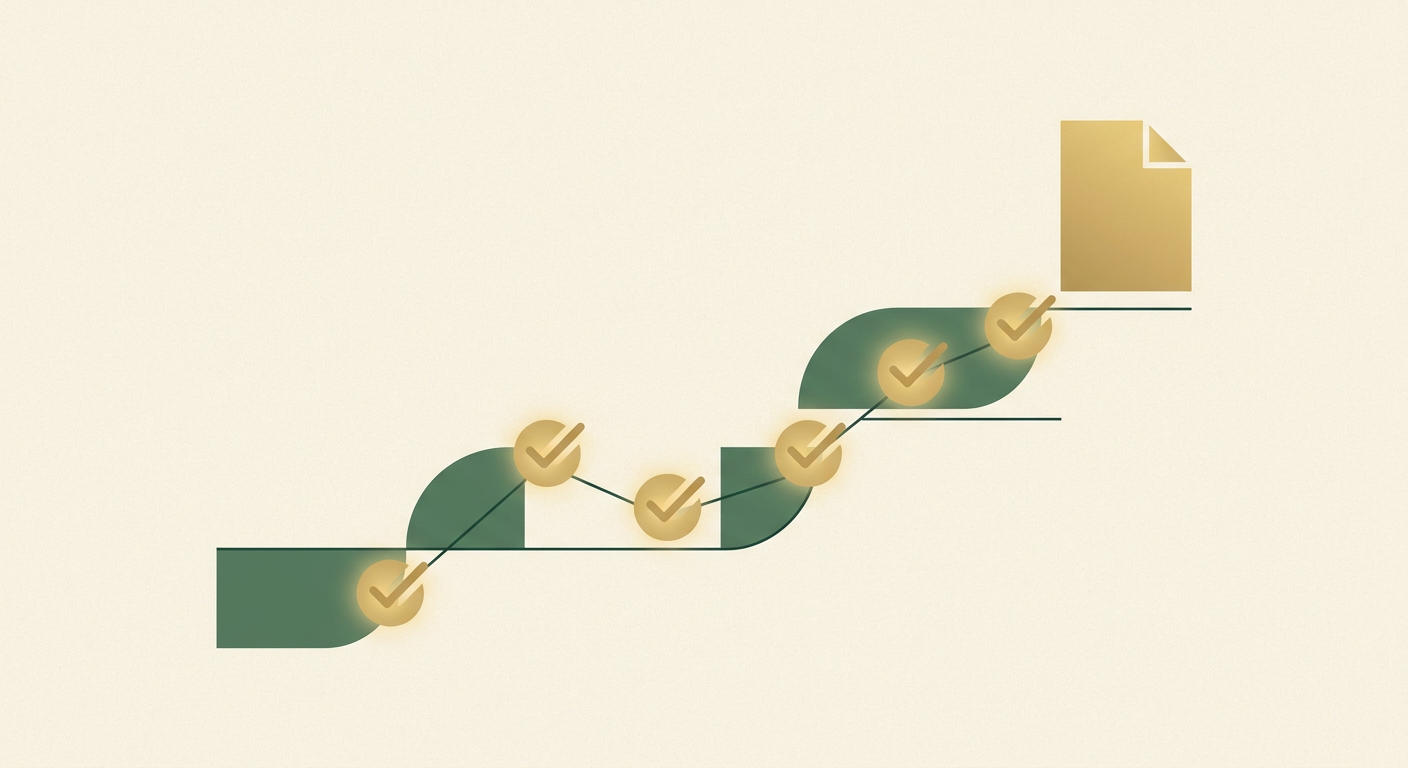
- Day 1 to 7: Audit your current marketing collateral. Pull every live pitch deck, white paper, and case study to flag any raw links.
- Day 8 to 14: Create an internal citation SOP. Pick one standard that aligns with your industry and mandate it company-wide.
- Day 15 to 21: Update your primary sales and marketing templates to lock the formatting.
- Day 22 to 30: Train your marketing team to utilize AI text generators to streamline this process and eliminate manual data entry.
The Bottom Line
Leverage is about sweating the details so your audience does not have to.
Properly formatting your references does not cost an extra dime, but it drastically elevates how the market perceives your brand.
Build a system that works for you, rather than scrambling to clean up messy documents before every investor meeting.
If you are ready to start generating coverage worth citing, check out our pricing and distribution plans.
Stop playing small, scale your distribution campaigns, and let your citations do the heavy lifting for your credibility.
Key takeaways
Citing your announcements correctly is a zero-cost leverage play that builds immediate trust with investors and clients. Stop pasting raw URLs into your pitch decks; instead, adopt a strict APA, MLA, or Chicago formatting standard to prove your operational maturity and eliminate reader friction.
See distribution plansFrequently asked questions
Do I cite the PR agency or the company issuing the news?
You must always cite the company or organization that is issuing the news, not the PR agency that distributed it. The issuing organization is recognized as the official author of the document.
Should I include a retrieval date for an online press release?
In APA 7 and Chicago 17, a retrieval or access date is generally not required unless the contents of the page are designed to change over time. Since these announcements are static historical documents, just the publication date and URL are sufficient.
How do I cite a release if a specific person is listed as the author?
While it is rare, if a specific individual is explicitly credited as the author rather than just a media contact, use their last name and first initial in place of the organization name at the beginning of your citation.
Are press releases considered primary or secondary sources?
They are considered primary sources because they are firsthand, official statements issued directly by the organization involved in the event or announcement.
What happens if the original URL of the announcement is taken down?
If the original link results in a 404 error, you should attempt to find an archived version using the Wayback Machine and cite that URL. If unavailable, cite it as a print source and remove the URL entirely.
Keep reading

3 min read
How To Submit Press Release To Local Newspaper
Learn how to bypass generic inboxes, extract hyper-local story angles, and successfully submit your press release to modern local newspapers for maximum community impact.
30 September 2026
5 min read
How To Send A Press Release Via Email To Your Customers
Learn the exact strategy to share corporate news with your existing customers without triggering spam filters or alienating your audience. Discover how to adapt your announcements into highly engaging, deliverability-safe emails that drive real business leverage.
26 September 2026
5 min read
How To Send A Press Release (With Guaranteed Publishing)
Discover the battle-tested approach to sending a press release with guaranteed publishing. Learn how to navigate syndication networks, avoid common SEO traps, and secure high-authority media placements that genuinely build your brand’s digital footprint.
23 September 2026Join the conversation
Comments are read by our editors before they appear on the page.