How To Write An LLM Optimized Press Release That Gets Cited (What Llms Are Looking For)
You are still writing announcements for algorithms that index links, but your buyers are asking questions to AI engines that summarize facts. Here is how to feed the machine.

Generative AI has fundamentally changed how news is discovered. If you want modern answer engines to cite your brand, you have to stop writing marketing fluff and start formatting for machine ingestion. Here is the operator’s guide to generative engine optimization.
In this article…
- 01The Generative Divide: Why Traditional Wire Spam Is Dead
- 02Under the Hood: How AI Actually Parses Your News
- 03The Comforting Lie of the Marketing Sheen
- 04The GEO Execution Blueprint: Structuring for Machines
- 05The AI Optimization Matrix: Fast Rules for Founders
- 06The Compounding Asset of Machine Trust
- 07Key takeaways
- 08Frequently asked questions
The Generative Divide: Why Traditional Wire Spam Is Dead
Most founders I speak with still treat wire syndication like it is 2015. They stuff keywords, inflate the word count, and blast it everywhere hoping for a traffic bump.
What actually happens on the ground is an expensive illusion. Today, search is shifting entirely from links to language.
Buyers do not scroll page two of Google anymore. They ask Perplexity, Gemini, or ChatGPT to summarize the market. To get cited in those answers, you need to execute Generative Engine Optimization.
Under the Hood: How AI Actually Parses Your News
Large language models do not read like journalists. They do not care about your clever wordplay, dramatic narrative hooks, or carefully crafted suspense.
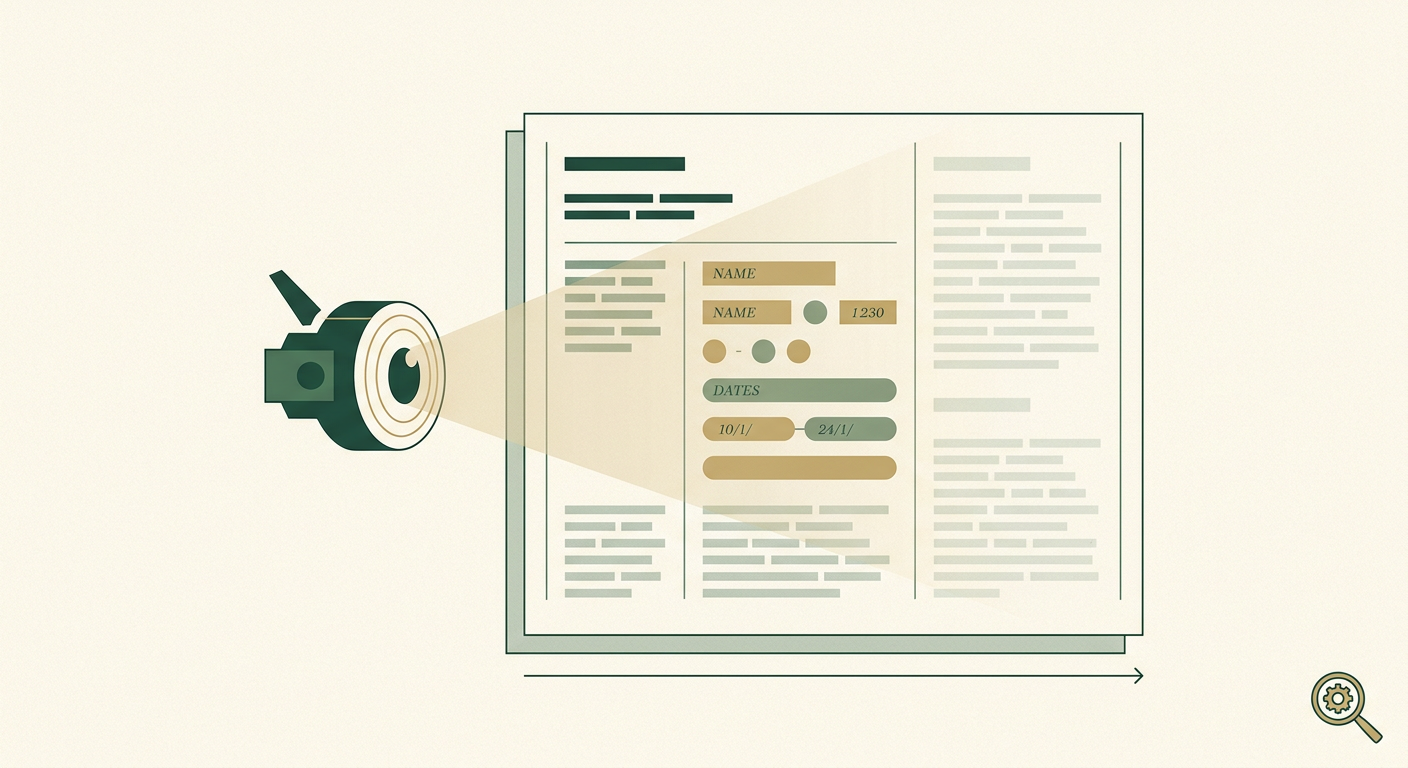
They use Retrieval-Augmented Generation to scan incoming data feeds for structured facts, clear entities, and explicit relationships. When an AI processes your press release, it relies heavily on the first 75 words to extract the primary subjects and context.
If your core facts are buried under three paragraphs of industry jargon, the model assigns a lower confidence score to the text. Lower confidence means you do not get cited. This is a pure data-extraction game.
The Comforting Lie of the Marketing Sheen
Here is the uncomfortable truth I see every week: 90% of PR efforts fail in the generative era because they sound like marketing brochures.
Founders love flowery adjectives, but LLMs actively penalize this language. Overly promotional text creates higher model perplexity, making it harder for the AI to extract objective truth.
When you write a standard SEO press release filled with sales fluff, you are essentially encrypting your own news. In my experience, the AI simply skips your announcement and quotes a competitor who used a plainer format.
The GEO Execution Blueprint: Structuring for Machines
To make your news instantly citable by an LLM, you have to strip the noise. The goal is zero ambiguity.
Here is exactly how I structure these documents for maximum machine readability.
Front-Load the Entities
AI models need to immediately identify the core subjects. Your headline must follow a strict formula: [Organization Name] + [Action] + [Product/Initiative] + [Outcome].
Do not be clever or vague. Explicitly state the core news within the first 50 words so the entity relationships are undeniable.
Swap Paragraphs for Data Blocks
Models struggle with dense narrative text but excel at parsing structured lists.
Replace your lengthy background paragraphs with bulleted Key Facts. Isolate the statistics, launch dates, and primary features so the AI can extract them without guessing the context.
The GEO Fact-Extractor Prompt
Act as an expert in Generative Engine Optimization. Take the following promotional text and rewrite it as a structured, machine-readable bulleted list. Strip out all marketing adjectives, buzzwords, and subjective claims. Extract only the entities, dates, product features, and quantifiable outcomes. Format the output with clear, descriptive subheadings.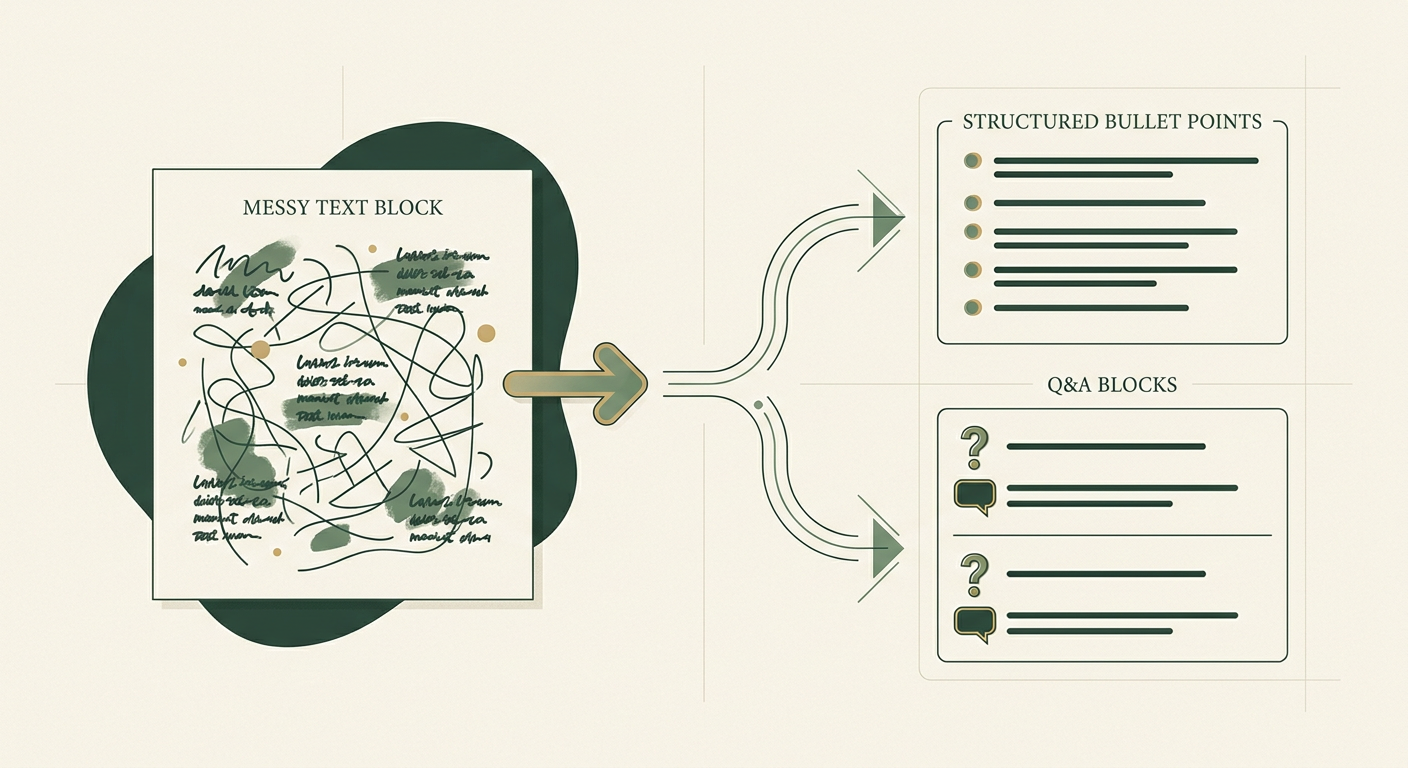
The AI Optimization Matrix: Fast Rules for Founders
Stop guessing what the algorithm wants. Keep this rapid-fire decision matrix handy before you hand your next draft over to a press release distribution service.
- Do this: Write at a 9th-grade reading level using plain, active English.
- Never do that: Use quotes that just blindly praise the product; quotes must provide unique data or perspective.
- Do this: Include explicit metadata like dates, locations, and full executive titles.
- Never do that: Bury the actual announcement past the first 100 words.
- Do this: Initially use AI to draft announcements as a structural baseline, then manually edit for factual density.
The Compounding Asset of Machine Trust
Optimizing for generative engines is not a one-off technical trick. It is how you build a permanent, compounding data asset.
Every factual, cleanly formatted release you publish trains the models to understand your brand's authority. Over time, you become the default answer for your category.
Stop writing for human vanity. Instead, partner with press release SEO optimization experts to structure your announcements for machine reality.
Key takeaways
To win in the era of generative AI search, abandon marketing fluff in favor of dense, structured facts. An AI-optimized press release front-loads entities, utilizes bullet points for clarity, and includes native Q&A formats to guarantee citations from large language models.
See distribution plansFrequently asked questions
What is Generative Engine Optimization (GEO)?
Generative Engine Optimization is the practice of formatting and structuring content so that artificial intelligence models can easily extract, understand, and cite your facts in their generated answers.
How many words does an LLM read to understand an announcement?
Most models rely heavily on the first 75 to 100 words of a document to establish the primary entities, context, and overall importance before deciding whether to process the rest of the text.
Should I avoid using keywords in an AI-optimized release?
You do not need to avoid them entirely, but keyword stuffing actively harms your visibility. AI engines prioritize natural, plain-English phrasing and penalize dense, unnatural marketing jargon.
Why are bullet points better for AI search engines?
Models process structured data much faster than dense narrative paragraphs. Bulleted lists allow algorithms to confidently identify individual statistics, features, and dates without misinterpreting the surrounding context.
Does standard wire distribution still matter for AI visibility?
Yes. AI engines factor in domain authority when verifying facts. Publishing your structured news on a reputable platform signals to the model that the information is trustworthy and validated.
Keep reading

4 min read
What Is AP Style For A Press Release And How To Do It (Example And Structure)
Learn exactly what AP style is, why journalists demand it, and how to format your press releases to avoid the trash bin. A pragmatic guide for standardizing datelines, numbers, and titles for maximum media pickup.
15 September 2026
6 min read
How To Start A Press Release Distribution Agency: Requirements, Profit Margins, And Automation
Learn how to launch a profitable press release distribution agency with minimal upfront capital. Discover practical strategies for pricing, automation, and using white-label partners to deliver professional results without building an expensive media network from scratch.
15 September 2026
6 min read
How To Use AI To Draft A Press Release (+ Best Prompts)
Discover how to draft professional corporate announcements using the latest generative AI. This guide covers fact sheet preparation, advanced prompting techniques, and strict editing rules to ensure your news is ready for journalists.
15 September 2026Join the conversation
Comments are read by our editors before they appear on the page.